Subscribe to the BHH Newsletter and stay up to date on the latest news, events and opportunities of the BHH digital health ecosystem.


Recinte Modernista de Sant Pau
Carrer de Sant Antoni Maria Claret 167
08025 Barcelona, Spain
contact@barcelonahealthhub.com

Back
How Spain Can Transform Osteoporosis Treatment with Digitally Enabled Fracture Liaison Services
NOVEMBER 3, 2025
Members' News
How Spain Can Transform Osteoporosis Treatment with Digitally Enabled Fracture Liaison Services
A patient who suffers from a fragility break of the bone, has a significantly increased risk of experiencing another if they are in the 50+ years old category, due to osteoporosis (weakening of bones). One fragility fracture raises the risk of another by 33% within a year, which could be a more debilitating fracture, often hip or spine.
It becomes paramount that there is infrastructure that looks after these patients, to prevent the avoidable injuries, giving long-term treatments and therapy.
Fracture Liaison Service (FLS) systematically identifies these high-risk patients, to initiate risk assessments, diagnose underlying osteoporosis and start long-term treatment planning, to avoid preventable injuries. FLS is a crucial component of preventative healthcare in this instance, on a global scale across healthcare.
In the healthcare landscape, Spain in particular, has a tremendous opportunity to lead in proactive, preventive care, for its patients to offer a long-term solution with FLS.
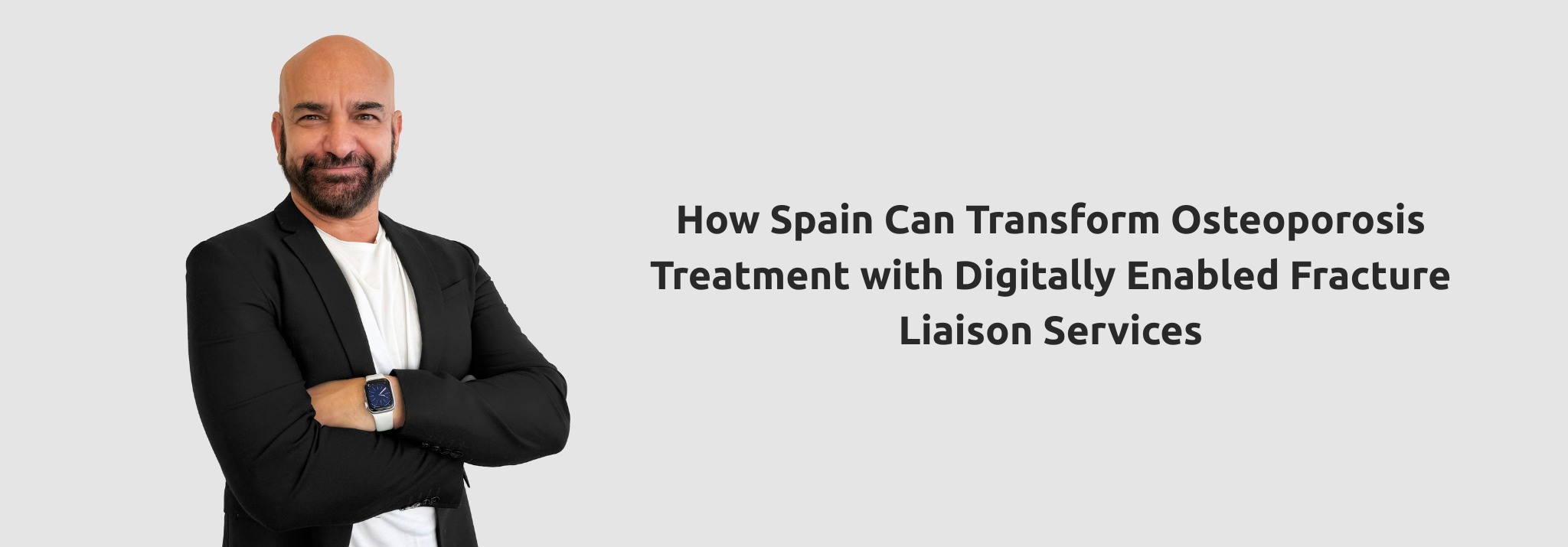
We discussed with Moh Thudor MBA ME BSc, Director of International Strategy at Open Medical, how digitally enabled FLS programmes can help Spain reduce the burden of osteoporosis and fragility fractures while improving patient outcomes and optimising healthcare resources.
Why FLS matters in preventative care
FLS helps break that cycle of preventable cases for high-risk patients of secondary fragilities by identifying at-risk patients early, connecting them to osteoporosis treatment, and dramatically reduces the likelihood of further fractures.
For the patient, that means fewer hospital stays and a better quality of life. For the system, it means fewer costly admissions and better use of limited resources.
However, left untreated, each fracture becomes more damaging than the last. People lose mobility, independence and often live with chronic pain and a long list of avoidable complications. FLS is the long-term solution for preventative care.
Healthcare needs FLS as much as patients do
Fragility fractures cost the Spanish healthcare system €4.3 billion each year, nearly 4% of total health spending. By 2030, that number is expected to hit €5.5 billion.
Moh discussed the serious impact of osteoporosis and fragility in Spain. “It’s larger than most people realise. In 2019, Spain reported around 285,000 new fragility fractures, that’s roughly 782 every day. It’s a major health and economic challenge that demands stronger preventative action.”
Challenges faced in covering post-fracture care
With their exceptional expertise and unwavering dedication, Spain’s healthcare professionals provide a remarkable standard of care, solidifying the nation’s reputation for medical excellence. With this however, there are identifiable areas where the system itself can strengthen its focus and funding on preventative care, to improve the population well-being, which Moh identified:
Uneven post-fracture care: Currently, only around 1-10% of Spanish hospitals have an operational FLS, meaning that most patients treated for an initial fracture are never assessed for osteoporosis. As a result, thousands remain at a high risk of another.
Treatment gaps: Around 64% of women with osteoporosis are not receiving therapy, which equates to roughly 1.2 million untreated women nationwide.
Lack of diagnostic tools: Accessing diagnostic tools are limited, Spain has roughly 15.5 DXA scanners per million people, ranking 15th in Europe, and waiting times for scans can reach up to 180 days, the longest in the EU.
These gaps make early detection difficult and highlight the need for faster, more connected systems to support both patients and clinicians.
Building long-term, nationwide frameworks
So, how can digital technology help bridge these gaps and improve FLS outcomes?
Moh continues to explain that “FLS is good clinical practice and a smart healthcare investment. A well-run programme can reduce re-fracture risk by up to 40%, freeing up hospital beds and cutting costs across orthopaedics, rehab, and long-term care. This is exactly the kind of high-impact, preventive care systems everywhere say they want more of. Today, more than 100 hospitals in Spain have some form of FLS in place.”
Each year, Spain sees around 330,000 fragility fractures. Yet many FLS programmes identify just 30–40% of eligible patients, sometimes even less. That means thousands of people are falling through the cracks every year because paper and manual processes are not efficient enough for today’s care needs.
This is where Moh recommends that “Digital technology is a game changer. By digitising the FLS pathway, hospitals can automatically track patients, streamline communication, and ensure no one gets lost in the system.”
Digital FLS case study in UK & Ireland
Open Medical has implemented their digital FLS service around the UK and Ireland, representing the rising demand for a digital solution.
Pathpoint FLS has demonstrated its transformative benefits for hospital sites in Ireland. One hospital in Ireland, Our Lady of Lourdes Hospital Drogheda, their estimated caseload per year is 1,127, but in a year, the FLS team had identified 71 patients. But when they implemented a digital
solution—Pathpoint FLS in this case, which is Open Medical’s cloud-based software for FLS management—that number increased to 1,073 patients identified and put on a treatment plan.
That’s over 1,000 additional people given a real chance to avoid the pain and complications of another fracture by using a system built for clinicians by clinicians that includes valuable functionalities like automation, intuitive worklists that include tags and filters, centralisation, and greater organisation and visibility.
Moh emphasised the importance of this success story, and the scalability of Pathpoint FLS internationally: “If applied nationally, similar technology could help Spain increase identification rates from around 30-40% to over 90%, dramatically improving patient care and outcomes.”
Opportunities for healthcare leaders & policymakers
“Spain already has all the right ingredients, talented clinicians, national fracture data collection, and strong osteoporosis guidelines. What’s needed now is a coordinated digital framework to bring all these elements together”, Moh explains.
With fragility fractures already costing €4.3 billion a year and an ageing population, Spain has a real opportunity to proactively lead, digitally enabled bone health management. By focusing on prevention instead of reaction, healthcare leaders can improve outcomes for thousands of patients while saving millions in the long-term.
The evidence is clear, the technology is proven, and the clinical community is ready. The real question left is: "How quickly can we make it happen?”.
Click here to find out more about Pathpoint FLS.
You may also like
See all

October 05, 2026
Members' News
September 21, 2026
Members' News
September 21, 2026
Members' News
September 11, 2026
Members' News
September 11, 2026
Members' News
July 17, 2026
Members' News
July 15, 2026
Members' News
July 15, 2026
Members' News
July 15, 2026
Members' News
July 10, 2026
Members' News


Recinte Modernista de Sant Pau
Carrer de Sant Antoni Maria Claret 167
08025 Barcelona, Spain
