Subscribe to the BHH Newsletter and stay up to date on the latest news, events and opportunities of the BHH digital health ecosystem.


Recinte Modernista de Sant Pau
Carrer de Sant Antoni Maria Claret 167
08025 Barcelona, Spain
contact@barcelonahealthhub.com

Back
The Future of Caregiving Is Now
JUNE 12, 2026
Members' News
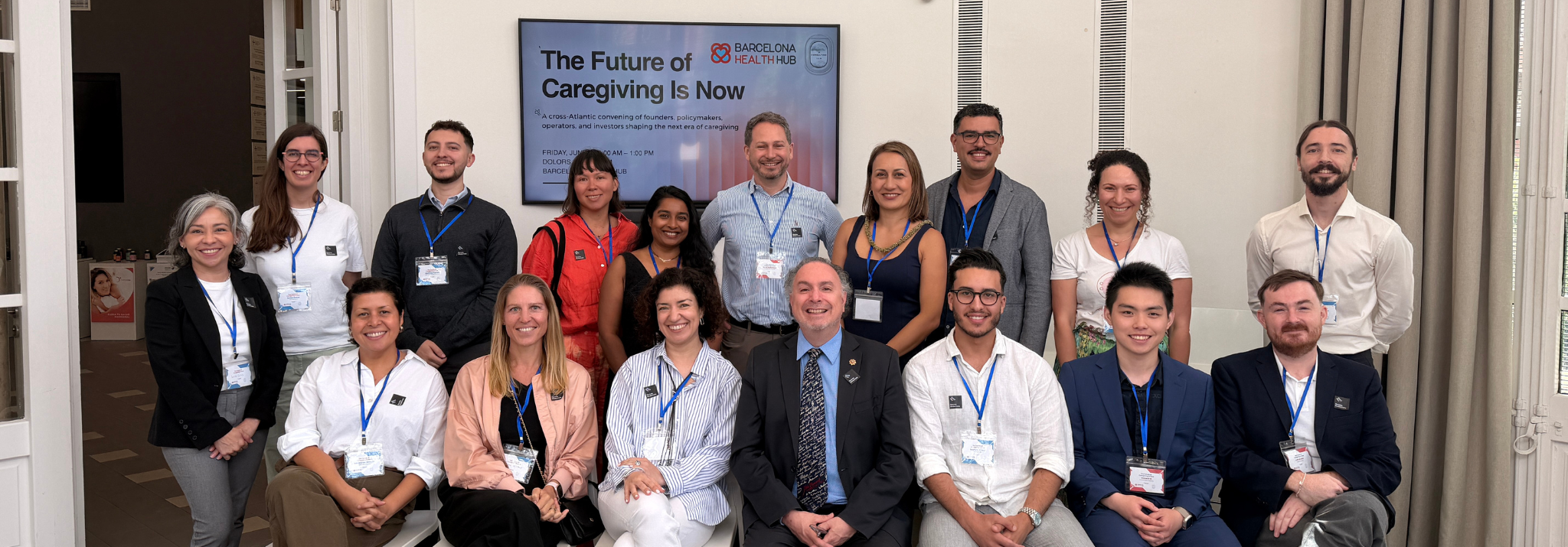
Some events inform. Some events move. Last week at the Barcelona & Madrid Health Hub, attendees experienced the rarer kind: the kind that cracks something open. The room was filled with terrific presentations, meaningful networking, and (fittingly, in Barcelona) pan con tomate y jamón.
The event was made possible by the 1A Consulting LLC team, especially Vincent Ni, who flew in from the US on the eve of beginning medical school, embodying the kind of next-generation commitment this work demands.
The panel was moderated by Dr. Poki'i Balaz, who created a space where professional expertise and personal truth could coexist without apology. Panelists Roshni Kavate RN, CHPN, MFT, Eli Shalenberg, MD, and Victor Horcasitas each brought perspectives spanning clinical practice, innovation, and the human stakes underlying both. Amanda Lukof of Eleplan joined via video as a core partner, and Kristen Speridakos of ianacare joined by Zoom at 5:45 in the morning her time — because when caregivers need showing up for, you show up.
Voices from the Room
"I went as a therapist. I left as a daughter." — Ksenia T., Attendee
Ksenia, a therapist who attended the event, shared her own caregiving experience. Her mother is 79 and lives in Russia, aging alone since her father died two years ago. Ksenia is in Barcelona — and because of the war in Ukraine, if she returns, she may not be able to leave again. She reflects: "I am a caregiver who cannot give care to the person who needs it most. What stayed with me from the discussion was this: technology, innovation, and global collaboration have the power to reimagine what care looks like across impossible distances. That is not abstract to me anymore. It is deeply, personally urgent."
"What resonated with me most was the opportunity to combine technology, innovation, and international collaboration to create care models that place both patients and caregivers at the center." — Luciano S., Attendee
Luciano arrived thinking about the role of technology in an aging world and left with a vision of care that is not patient-centric or caregiver-centric, but both, inseparably. "As populations age and healthcare needs become more complex, technology has the potential to expand access, reduce administrative burdens, and empower both caregivers and patients with better information and tools."
What Ksenia and Luciano named — from such different angles — is the same truth: caregiving is not a personal problem. It is a global, structural, and deeply human one. Borders separate families. Systems fail caregivers. Technology has barely begun to close the gap.
Additional thanks to Souhaib Chtioui and the team at ESED – Cyber Security & IT Solutions for supporting the event.
The future of caregiving is not coming. It is now — and it is being built together.
You may also like
See all

October 05, 2026
Members' News
September 21, 2026
Members' News
September 21, 2026
Members' News
September 11, 2026
Members' News
September 11, 2026
Members' News
July 17, 2026
Members' News
July 15, 2026
Members' News
July 15, 2026
Members' News
July 15, 2026
Members' News
July 10, 2026
Members' News

Recinte Modernista de Sant Pau
Carrer de Sant Antoni Maria Claret 167
08025 Barcelona, Spain
